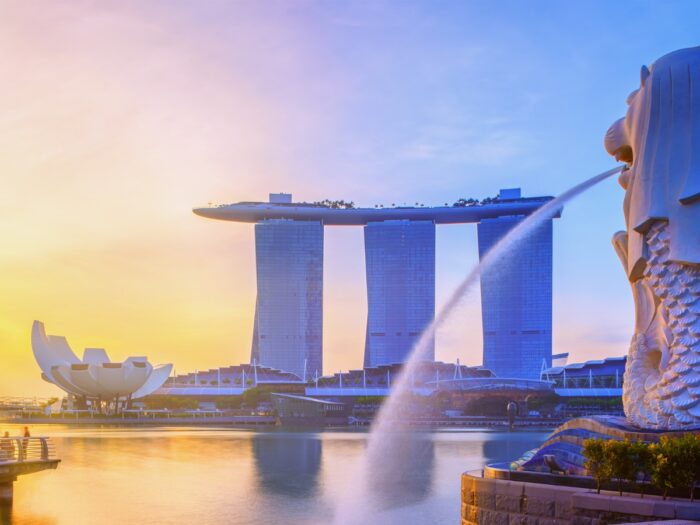
Singapore has never relied on natural wonders to attract travellers. The city offers no dramatic mountain ranges, sprawling wine regions, or coastlines that dominate international tourism campaigns. Yet year after year, it remains one of the world’s most important destinations for business, leisure, and luxury travel. Much of that success stems from execution. Flights connect seamlessly, infrastructure performs efficiently, and service standards remain remarkably consistent. Hospitality has become an extension of that national identity, which helps explain why the luxury hotels in Singapore occupy such a distinctive position within global travel.
Over the past two decades, Singapore has developed one of the most sophisticated hotel markets anywhere in the world. Global luxury brands compete alongside heritage icons, while travellers can choose between historic grandeur, tropical seclusion, contemporary design, and skyline-centric luxury, often within a short drive of one another. Yet what makes the city particularly interesting is that its finest hotels do more than provide exceptional accommodation. Each captures a different aspect of Singapore itself. Together, they reveal how a city best known for efficiency has elevated hospitality into an art form.
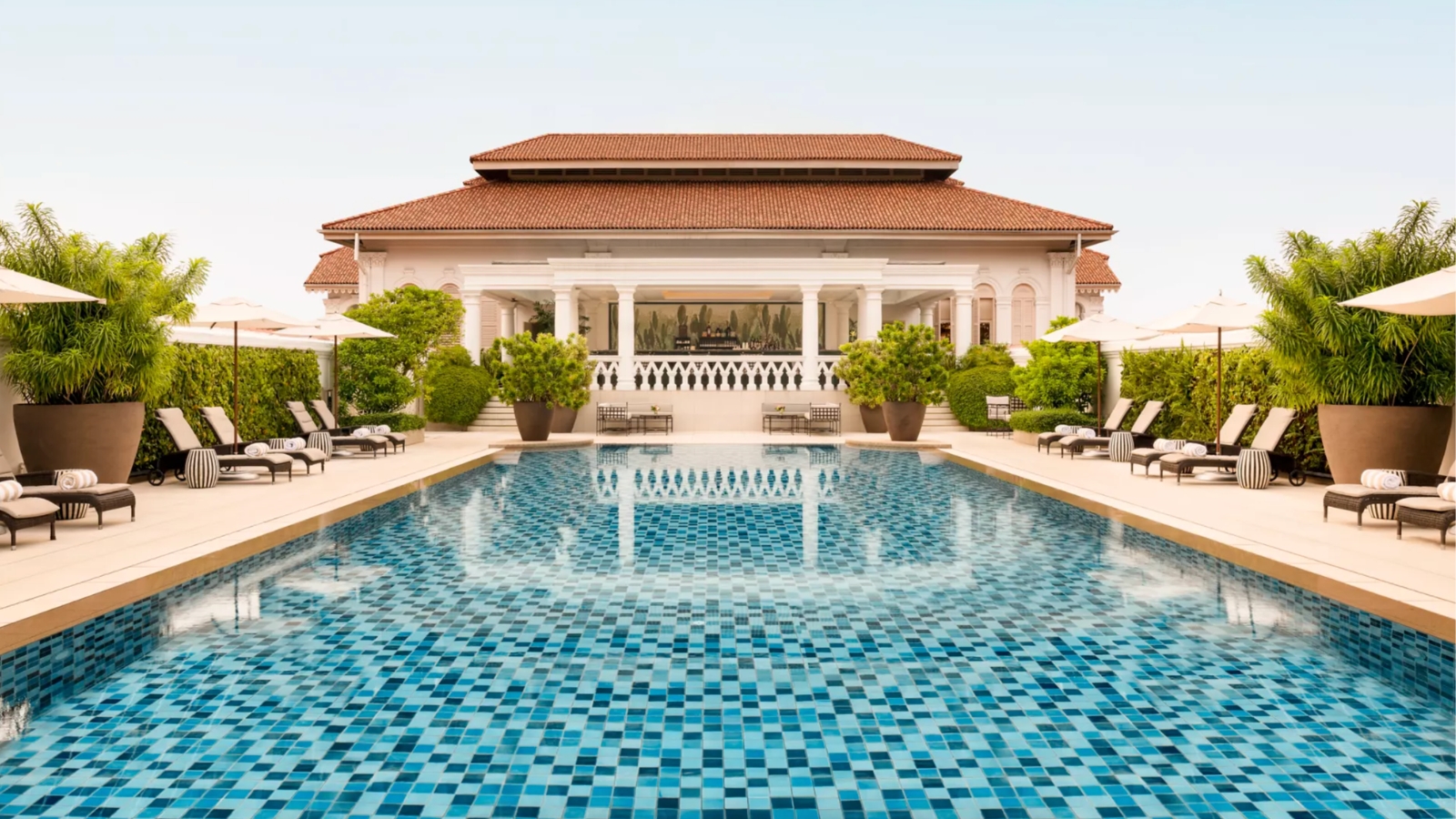
Image Courtesy: Official website
Raffles Singapore: where the story begins
Few hotels in the world are as closely intertwined with the identity of their city as Raffles Singapore. Since opening in 1887, the property has welcomed royalty, diplomats, writers, entrepreneurs, and generations of travellers moving through Asia. Its white colonial façades and palm-lined courtyards have become as recognisable as many of Singapore’s modern landmarks, yet what makes Raffles remarkable is not its age but its continued relevance. While many historic hotels rely heavily on nostalgia, Raffles has managed to preserve its heritage while evolving for a contemporary audience.
Following an extensive restoration, the hotel remains entirely suite-based, combining traditional architecture with modern comfort, personalised butler service, and some of the city’s most celebrated dining venues. The Long Bar continues to attract visitors seeking the original Singapore Sling, but the deeper appeal of Raffles lies in its atmosphere. Every stay feels connected to a larger narrative, giving guests the sense that they are participating in a small part of Singapore’s story. In a city defined by constant reinvention, Raffles remains a reminder of where that story began and why it continues to matter.
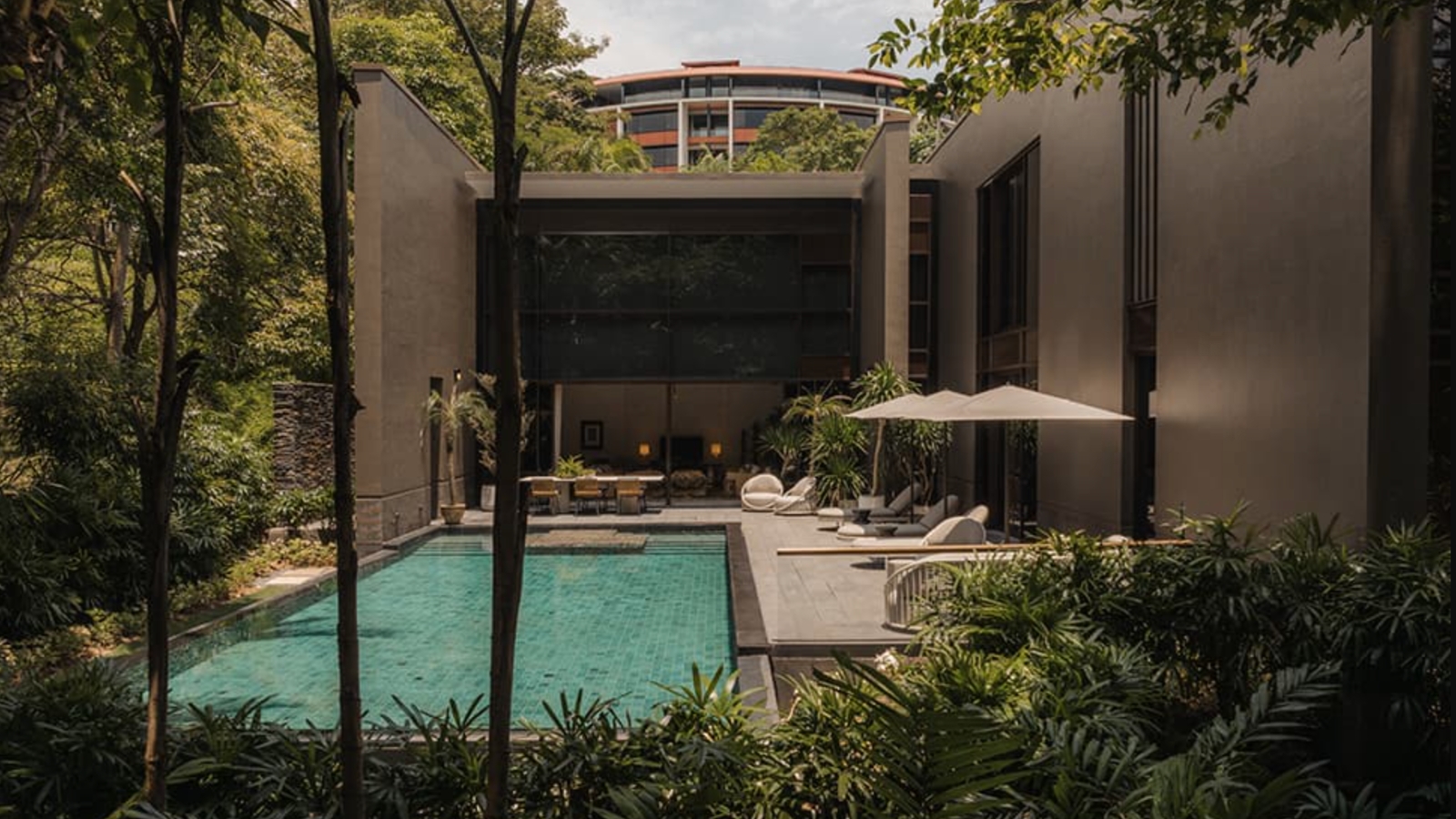
Image Courtesy: official website
Capella Singapore: an island retreat within the city
If Raffles reflects Singapore’s history, Capella Singapore speaks to the city’s ability to create calm within one of Asia’s busiest urban environments. Located on Sentosa Island and surrounded by nearly thirty acres of tropical greenery, the property feels remarkably removed from the city despite sitting only minutes from the financial district. This contrast has become central to its appeal, allowing guests to enjoy a resort-style experience without sacrificing access to Singapore’s cultural, commercial, and culinary attractions.
Designed by Sir Norman Foster, the hotel blends restored colonial buildings with contemporary architecture, creating a sense of openness rarely found in urban hospitality. Villas with private pools, expansive suites, and a strong wellness programme reinforce the atmosphere of retreat, while the property’s reputation for privacy continues to attract high-profile international guests. Capella’s success reflects a broader shift within luxury travel, where travellers increasingly seek access to major cities without wanting to feel consumed by them. Few properties deliver that balance with greater sophistication.
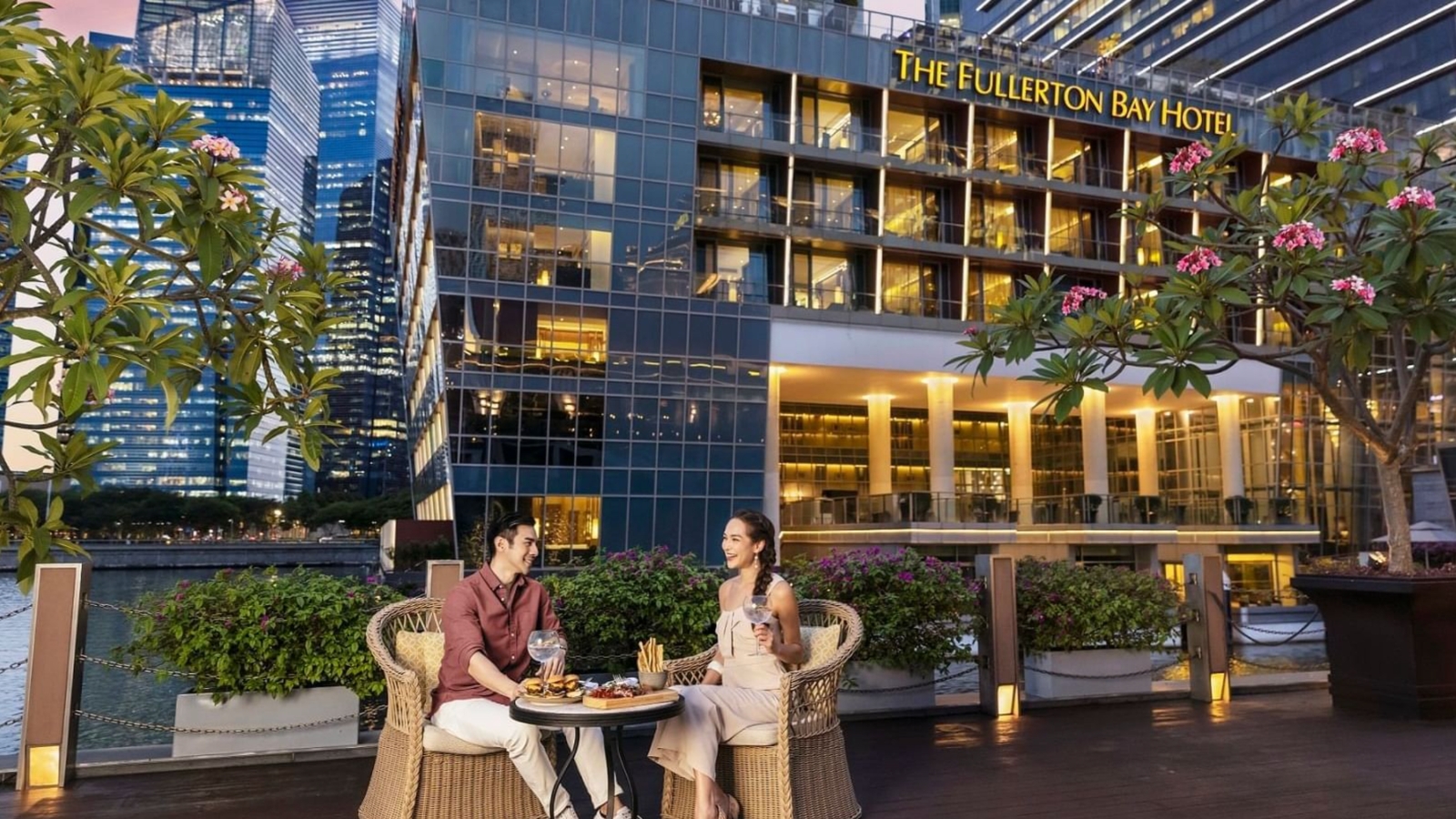
Image Courtesy: official website
The Fullerton Bay Hotel Singapore: the city’s front row seat
Every great city has a hotel that seems inseparable from its skyline. In Singapore, that distinction belongs to The Fullerton Bay Hotel. Positioned directly on Marina Bay, the property occupies one of the most recognisable locations in the country, offering uninterrupted views across landmarks such as Marina Bay Sands and the central business district. For many visitors, the hotel provides their first real understanding of modern Singapore and the confidence with which the city has shaped its waterfront.
Yet the hotel’s appeal extends well beyond its views. Unlike many large luxury properties, Fullerton Bay feels intimate, and its relatively modest room count allows for a level of personalisation that larger hotels often struggle to achieve. Floor-to-ceiling windows, generous room proportions, and interiors that favour warmth over spectacle create an experience that feels elegant rather than theatrical. The rooftop infinity pool has become one of Singapore’s most recognisable hospitality spaces, particularly at sunset when the skyline begins to illuminate across the bay. Few properties capture the ambition and energy of contemporary Singapore more effectively.
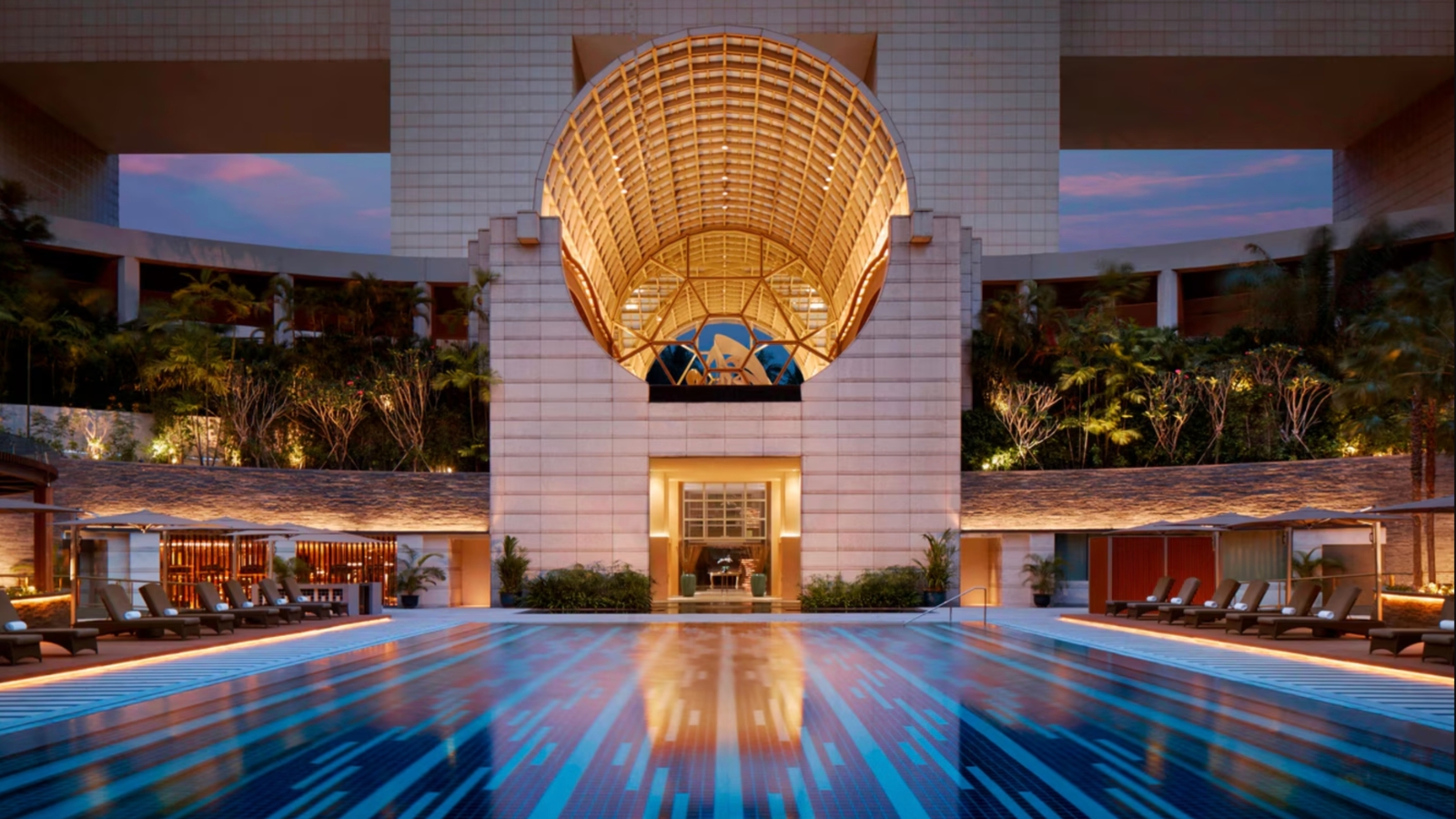
Image Courtesy: official website
The Ritz-Carlton, Millenia Singapore: where hospitality meets culture
Some hotels build their reputation through architecture, while others rely on service. The Ritz-Carlton, Millenia Singapore has succeeded through both while adding something increasingly rare within luxury hospitality: cultural depth. The property houses one of the most significant contemporary art collections found in any hotel in Asia, featuring works by artists including Frank Stella, David Hockney, and Andy Warhol. Rather than treating art as decoration, the hotel integrates it throughout public spaces and corridors, making it part of the guest experience itself.
The guestrooms remain among the largest in Singapore, while the location places guests within easy reach of Marina Bay, major convention venues, and key commercial districts. These advantages have made the property a longstanding favourite among business travellers, yet the atmosphere never feels transactional. Instead, the hotel projects a quiet confidence that comes from consistency rather than trend-driven reinvention. Decades after opening, it remains one of the most complete luxury experiences in the city and continues to demonstrate how hospitality can create a sense of place through culture as much as comfort.
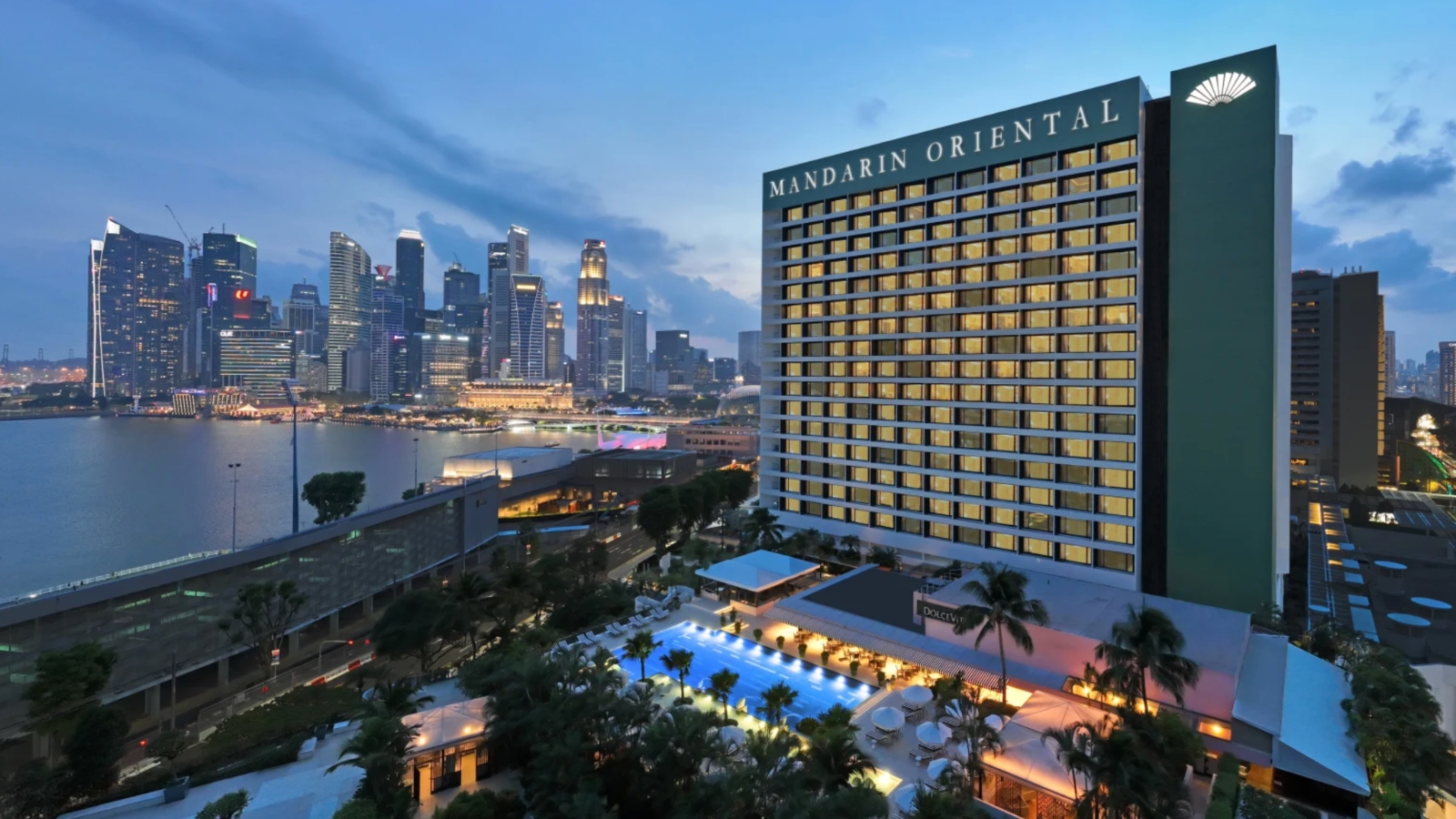
Image Courtesy: Official website
Mandarin Oriental, Singapore: a modern classic reimagined
Luxury hospitality faces a difficult challenge. Hotels must remain relevant while preserving the qualities that made them successful in the first place. Few recent transformations have navigated that challenge as effectively as Mandarin Oriental, Singapore. Following a comprehensive renovation, the property has introduced itself to a new generation of travellers while retaining the service culture that built its reputation.
Positioned along Marina Bay, the hotel places guests within easy reach of major attractions, business districts, cultural institutions, and dining destinations. The redesigned interiors embrace a more contemporary aesthetic, yet the hotel’s greatest strength remains unchanged. Service continues to define the experience, shaping everything from arrival to departure with a level of attentiveness that feels polished without becoming formal. That commitment to hospitality has helped Mandarin Oriental maintain its position among the most respected luxury hotels in Singapore, despite intense competition from newer entrants. In many ways, the property mirrors Singapore itself: modern, confident, refined, and constantly evolving.
Why Singapore remains one of the world’s great hotel cities
Taken together, these hotels reveal why Singapore occupies such a unique position within global hospitality. Raffles preserves history, Capella offers retreat, Fullerton Bay celebrates the skyline, The Ritz-Carlton champions culture, and Mandarin Oriental delivers contemporary refinement. Each tells a different story, yet all share a common characteristic: an unwavering commitment to excellence.
In Singapore, luxury often reveals itself through precision rather than excess. The city’s finest hotels understand this instinctively. They recognise that true hospitality extends beyond beautiful rooms or impressive facilities and instead focus on creating experiences that feel effortless from beginning to end. That philosophy has shaped the luxury hotels in Singapore for decades and continues to define why the city remains one of the world’s most admired hospitality destinations.
FAQs
What are the best luxury hotels in Singapore?
Raffles Singapore, Capella Singapore, The Fullerton Bay Hotel Singapore, The Ritz-Carlton Millenia Singapore, and Mandarin Oriental Singapore rank among the city’s most celebrated luxury hotels.
Which luxury hotel in Singapore is best for first-time visitors?
The Fullerton Bay Hotel Singapore offers a prime Marina Bay location and easy access to many of the city’s major attractions.
Is Raffles Singapore worth staying at?
Raffles Singapore remains one of Asia’s most iconic hotels, combining historic architecture, personalised service, and a strong sense of place.
Which luxury hotel in Singapore offers a resort experience?
Capella Singapore provides a resort-style atmosphere on Sentosa Island while remaining close to the city centre.
What makes Singapore’s luxury hotels unique?
Singapore’s leading hotels combine exceptional service, efficient operations, world-class dining, and strong design while reflecting different aspects of the city’s identity.