Luxury travel is undergoing a fundamental shift. For decades, hospitality measured luxury through scale, exclusivity, and excess. Larger resorts, grander architecture, and increasingly elaborate experiences became the industry’s defining symbols of success. Today, however, travellers are asking different questions. They want to know how a hotel sources its ingredients, how it manages water and energy consumption, and how tourism benefits local communities. At the same time, businesses face growing ESG obligations, prompting them to evaluate the environmental impact of everything from conferences and incentive trips to executive retreats. As a result, sustainability has moved from a marketing message to an operational requirement.
The most significant sustainable travel trends of 2026 reflect this change. Luxury is no longer defined solely by what a destination offers, but by what it protects, preserves, and restores. From regenerative tourism and eco-certified hotels to net-zero hospitality and wellness-led travel, sustainability is reshaping the way travellers experience the world.

Image Courtesy: Canva Pro
What Is Sustainable Tourism?
At its core, sustainable tourism encourages a more intentional approach to travel. Rather than focusing solely on convenience or consumption, it aims to minimise the environmental, economic, and social impact often associated with mass tourism.
Historically, high-volume travel has placed significant pressure on local ecosystems, strained infrastructure, and altered cultural landscapes. In contrast, sustainable tourism seeks to reduce carbon emissions, manage resources more responsibly, and support cultural preservation. The goal is simple: to ensure that destinations remain viable, vibrant, and accessible for future generations.
These priorities are also reshaping business travel. Today, organisations evaluate more than just cost and efficiency when planning international meetings, conferences, and corporate retreats. Increasingly, they are assessing environmental impact as well, highlighting how sustainable hospitality has evolved from a niche consideration into a business necessity. As a result, many of the most influential sustainable travel trends 2026 are being driven as much by corporate demand as by leisure travellers.
Why Travellers Prefer Eco-Friendly Hotels
Modern travellers are becoming far more discerning about sustainability claims. Greenwashing — the practice of making a product or service appear more environmentally responsible than it actually is — is now scrutinised more closely than ever. Guests increasingly expect measurable action rather than marketing promises.
Several factors are driving the growing popularity of eco-friendly hotels.
For business travellers, staying at a certified sustainable property often supports broader ESG objectives and contributes to Scope 3 emissions reporting. At the same time, many environmentally conscious hotels incorporate features such as biophilic design, improved air quality, locally sourced food, and wellness-focused experiences, all of which contribute to guest wellbeing.
Overtourism is also influencing traveller behaviour. As popular destinations become increasingly crowded, many luxury travellers are gravitating towards smaller eco-resorts and low-density retreats that prioritise conservation, privacy, and a stronger connection to their surroundings.
Top Sustainable Hotel Trends
1. Carbon Neutrality And Net-Zero Hospitality
Among the most important sustainable travel trends 2026 is the industry’s pursuit of carbon neutrality. Hotels are increasingly investing in renewable energy sources such as solar and geothermal power while implementing more efficient water, waste, and energy management systems. Many properties are also supporting verified carbon-offset programmes as they work towards net-zero emissions targets.
2. Biophilic Design
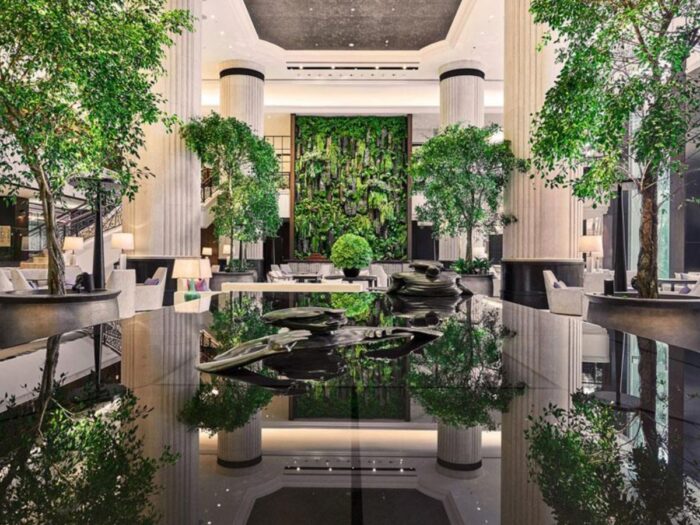
Biophilic design continues to gain momentum across luxury hospitality. By incorporating natural elements into architecture and interiors, hotels create environments that feel healthier, calmer, and more connected to their surroundings.
This can take many forms, from abundant natural light and living greenery to organic materials, nature-inspired patterns, expansive views, and thoughtfully designed outdoor spaces. Beyond aesthetics, biophilic design actively contributes to guest wellbeing while strengthening a property’s environmental credentials.
3. Zero-Plastic Hospitality
Hotels around the world are accelerating efforts to eliminate single-use plastics. Refillable amenities, biodegradable alternatives, reusable materials, and sustainable packaging are increasingly becoming standard rather than exceptional.
However, successful implementation requires more than replacing products. Long-term change depends on operational commitment, staff engagement, and clearly defined sustainability strategies throughout the property.
4. Circular Hospitality
Closely linked to zero-plastic initiatives, circular hospitality focuses on reducing waste by extending the lifespan of products and materials. Rather than following the traditional “take, make, dispose” model, hotels are embracing systems that prioritise reuse, recycling, and responsible sourcing.
As sustainability expectations continue to rise, circular hospitality is emerging as one of the most practical sustainable travel trends 2026 shaping the future of luxury accommodation.
Key Shifts In Eco-Tourism Trends
1. Regenerative Travel
Regenerative travel goes beyond simply reducing environmental impact. Instead, it focuses on actively improving destinations by supporting local ecosystems, communities, and cultural heritage.
Travellers increasingly want their journeys to create positive outcomes, making regenerative tourism one of the fastest-growing sustainable travel trends 2026.
2. Eco-Certifications
As sustainability claims become more widespread, independent verification is becoming increasingly important. Eco-certifications provide travellers with confidence that a hotel, experience, or tourism provider meets recognised environmental standards while helping distinguish genuine initiatives from greenwashing.
3. Community-Based Tourism
Community-based tourism places local residents at the centre of the visitor experience. By allowing communities to manage and benefit directly from tourism activities, the model helps strengthen local economies while preserving cultural traditions and encouraging more meaningful interactions between travellers and destinations.
4. Forest-Bathing
Inspired by the Japanese practice of shinrin-yoku, forest-bathing encourages people to slow down and engage mindfully with nature.
Unlike hiking or trekking, the focus is not on physical achievement but on sensory immersion. Participants move slowly through natural environments, using sight, sound, smell, and touch to deepen their connection with the landscape.
5. Quietcations
Also known as silent travel or hushpitality, quietcations prioritise rest, reflection, and intentional downtime. Rather than filling every hour with activities, travellers seek destinations that allow them to disconnect from constant stimulation and reconnect with themselves.
Remote locations, minimal digital distractions, and slower itineraries are making quietcations one of the defining sustainable travel trends of 2026.

Image Courtesy: Canva Pro
The Future Of Eco-Tourism In India And Beyond
The future of sustainable travel will depend on innovation as much as intention. Developments such as electric rail networks, sustainable aviation fuel (SAF), and pedestrian-focused urban planning are already reshaping how people move around the world while reducing environmental impact.
India is embracing this shift in its own way. From wellness retreats in the Himalayas to eco-conscious luxury resorts in Goa, hospitality brands are investing heavily in regenerative travel experiences that combine environmental responsibility with high-end service.
Many properties are blending traditional Ayurvedic practices with modern sustainability initiatives, including community partnerships, water conservation systems, and locally driven tourism models. As these approaches continue to evolve, sustainable travel trends 2026 suggest a future where cultural authenticity, environmental responsibility, and luxury hospitality work together rather than compete with one another.